


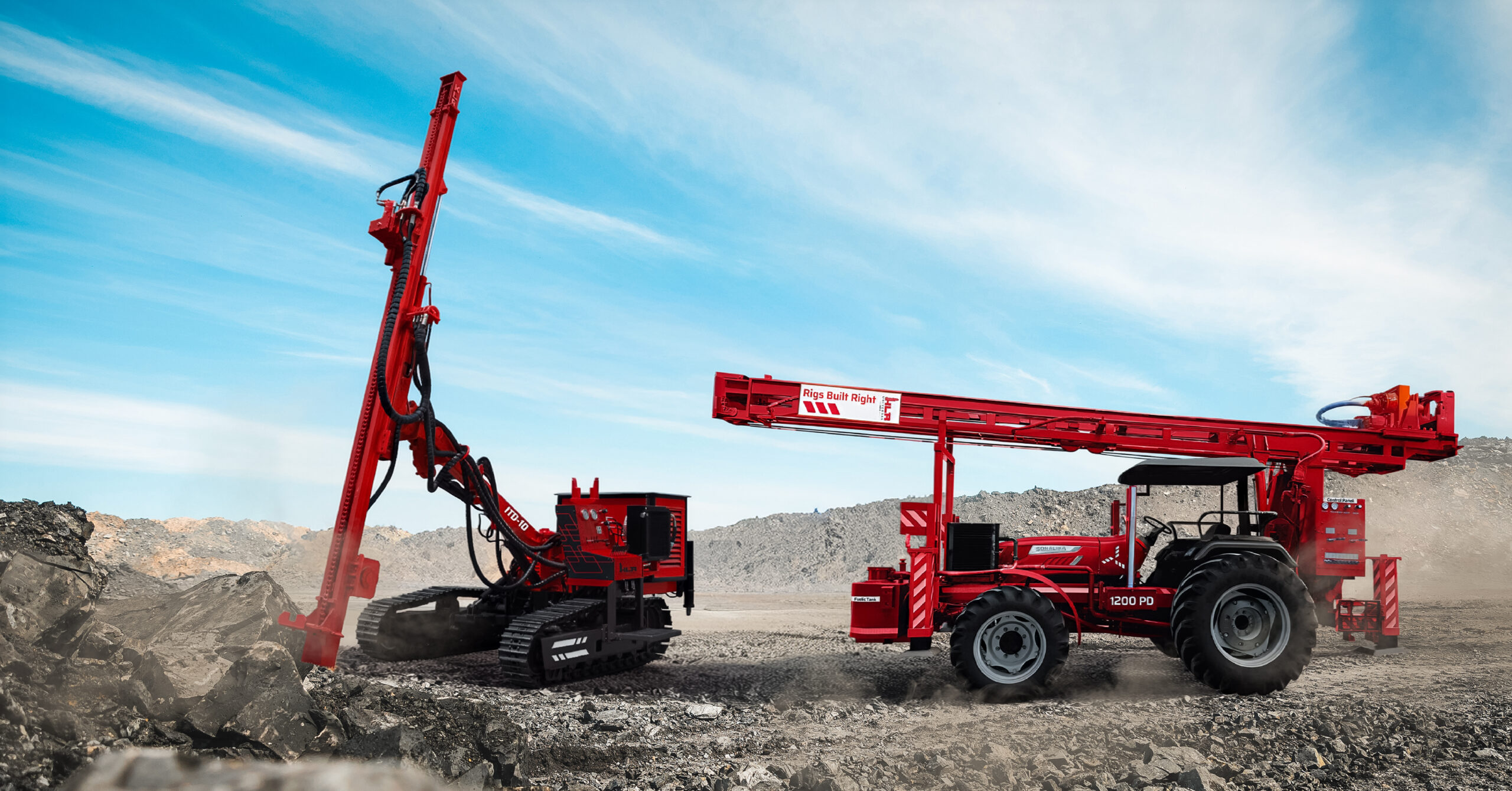
Selecting the right drilling method is essential for maintaining efficiency, productivity, and cost control in demanding drilling environments. Industries such as mining, quarrying, construction, and infrastructure often involve hard rock drilling, where equipment performance directly affects project timelines and operational costs. Choosing the right technology helps improve drilling speed, reduce equipment wear, and maintain consistent borehole quality.
Two widely used methods for drilling in challenging geological conditions are rotary and DTH drilling. A Rotary Drilling Rig uses rotational force to cut and remove rock formations, making it suitable for many large-scale drilling applications. In contrast, a DTH Drilling Machine uses a pneumatic hammer positioned at the bottom of the borehole to deliver high-impact energy directly to the drill bit.
Both drilling technologies play an important role in modern hard rock drilling operations. Understanding how each method works and where it performs best helps operators select the most efficient solution for their project.
What is Rotary Drilling?
Rotary drilling is a widely used drilling method where a rotating drill bit cuts through rock formations while drilling fluid or compressed air removes debris from the borehole. A Rotary Drilling Rig applies continuous rotational force to the drill string, allowing the bit to grind and penetrate rock layers.
A typical Rotary Drilling Machine consists of several key components, including the drill rig structure, rotary head, drill string, drill bit and circulation system. These components work together to maintain consistent drilling performance and borehole stability.
Rotary drilling rigs are available in several configurations depending on project requirements.
Common types of rotary drilling rigs include:
- Truck-mounted rotary rigs for mobile drilling operations
- Crawler-mounted rigs designed for rough terrain and mining environments
- Hydraulic rotary rigs used in construction and foundation drilling
- Heavy-duty rotary rigs used in large-scale mining projects
A Rotary Drilling Rig is particularly suitable for drilling larger diameter holes and for projects that require consistent drilling performance across different geological formations.
What is DTH Drilling?
DTH (Down-the-Hole) drilling is a method where the hammer mechanism is positioned directly behind the drill bit at the bottom of the borehole. In a DTH Drilling Rig, compressed air powers a pneumatic hammer that repeatedly strikes the drill bit, breaking the rock through high-frequency impacts.
Unlike rotary drilling, where energy is applied from the top of the drill string, a DTH Drilling Machine delivers impact energy directly to the rock formation. This direct energy transfer allows faster penetration in hard and abrasive rock formations.
Key components of a DTH drilling system include:
- The DTH hammer that generates the percussive force
- DTH drill rods that transmit compressed air to the hammer
- Drill bit designed for high-impact rock penetration
- Air compressor system powering the hammer
Many drilling contractors rely on a reliable DTH Hammer Supplier to ensure durable and high-performance hammer tools for demanding drilling environments.
Because the hammer operates at the bottom of the borehole, DTH systems provide excellent drilling accuracy and high penetration rates in hard rock formations.
Key Differences Between Rotary and DTH Drilling
Operating Mechanism and Efficiency
The most fundamental difference between the two methods lies in how drilling energy is delivered.
A Rotary Drilling Rig uses rotational force applied from the surface to cut and grind rock formations. The drill bit rotates continuously while drilling fluid or compressed air removes rock cuttings.
In contrast, a DTH Drilling Machine uses percussive impact generated by the hammer located at the bottom of the hole. This direct impact force allows efficient rock fragmentation with minimal energy loss.
Key operational differences include:
- Rotary drilling uses continuous rotation
- DTH drilling uses a high-frequency hammer impact
- Rotary drilling relies on surface energy transfer
- DTH drilling delivers energy directly to the rock
Because of this mechanism, DTH drilling often provides higher efficiency in extremely hard rock conditions.
Performance in Hard Rock Conditions
When it comes to hard rock drilling, DTH drilling generally performs better due to its high-impact energy transfer. The hammer breaks the rock directly at the drilling point, resulting in faster penetration rates and better borehole stability.
A Rotary Drilling Machine can still handle moderately hard formations, but may experience slower penetration rates when drilling extremely hard or abrasive rock layers.
In deep mining or quarrying projects where consistent drilling performance is required, DTH drilling often becomes the preferred method.
Cost and Time Efficiency
The cost efficiency of each method depends on project conditions.
A Rotary Drilling Rig typically has lower operational costs and simpler maintenance requirements, making it a practical solution for large-scale projects involving softer formations or wider boreholes.
A DTH Drilling Rig, however, may involve higher equipment and air compressor costs. Despite this, its faster drilling speed in hard rock formations can significantly reduce project timelines and labour costs.
Rotary vs DTH Drilling: Comparison Table
| Parameter | Rotary Drilling Rig | DTH Drilling Machine |
| Operating Method | Rotational cutting | Percussive hammer impact |
| Energy Transfer | From surface through drill string | Directly at the bottom of the hole |
| Best Formation | Soft to medium-hard rock | Hard and abrasive rock |
| Drilling Speed | Moderate | High penetration rate |
| Borehole Accuracy | Moderate | High accuracy |
| Operational Cost | Lower | Higher but faster drilling |
Applications of Rotary and DTH Drilling in Hard Rock Conditions
When to Choose Rotary Drilling?
A Rotary Drilling Rig is typically used in applications where large diameter holes are required, and rock formations are not extremely hard.
Common applications include:
- Construction foundation drilling
- Water well drilling
- Large diameter boreholes
- Soft to medium-hard rock formations
A Rotary Drilling Machine is also widely used in infrastructure projects due to its versatility and ability to handle different drilling depths.
When to Choose DTH Drilling?
A DTH Drilling Rig is best suited for demanding geological conditions where high-impact energy is needed to break rock formations.
Typical applications include:
- Mining exploration drilling
- Quarry blast hole drilling
- Deep hard rock drilling operations
- Geotechnical drilling in tough formations
In these applications, DTH drill rods transmit compressed air efficiently to the hammer, while high-quality tools supplied by a reliable DTH Hammer Supplier ensure consistent drilling performance.
Advantages and Disadvantages of Rotary vs DTH Drilling
Advantages of Rotary Drilling
A Rotary Drilling Rig offers several operational benefits.
- Suitable for large diameter drilling
- Lower equipment and maintenance costs
- Versatile for different geological formations
- Well-suited for construction and foundation work
A Rotary Drilling Machine is therefore widely used in infrastructure and general drilling applications.
Disadvantages of Rotary Drilling
Despite its versatility, rotary drilling has certain limitations.
- Slower penetration in extremely hard formations
- Higher wear on drill bits during hard rock drilling
- Reduced efficiency in deep hard rock environments
Advantages of DTH Drilling
A DTH Drilling Machine provides excellent performance in demanding drilling conditions.
- High penetration rates in hard rock
- Better energy efficiency in deep drilling
- Improved borehole straightness
- Reliable performance in abrasive formations
Because of these advantages, DTH drilling is often preferred for heavy-duty mining operations.
Disadvantages of DTH Drilling
DTH drilling systems also have certain challenges.
- Higher operational costs due to compressors
- Increased maintenance requirements
- Dependence on high-quality tools from a reliable DTH Hammer Supplier
Advantages and Disadvantages Table
| Method | Advantages | Disadvantages |
| Rotary Drilling | Lower cost, versatile, and large hole capability | Slower in hard rock |
| DTH Drilling | Faster drilling, efficient in hard rock, and accurate | Higher cost, compressor requirement |
Factors to Consider When Choosing Between Rotary and DTH Drilling
Rock Type and Formation
The hardness of the rock formation is one of the most important factors when selecting a drilling method. Projects involving extremely hard formations usually benefit from a DTH Drilling Rig, while softer formations can be drilled efficiently using a Rotary Drilling Rig.
Depth of Drilling and Hole Diameter
The required drilling depth and borehole diameter also influence equipment selection. A Rotary Drilling Machine is often used for wider boreholes, while a DTH Drilling Rig is ideal for deep and narrow blast holes commonly used in mining and quarrying.
Cost and Maintenance
Cost considerations include equipment price, operational efficiency, and long-term maintenance. While a Rotary Drilling Rig typically involves lower upfront costs, DTH drill rods, hammers, and air compressors used in DTH systems may increase operational expenses. However, faster drilling speeds can offset these costs in large mining projects.
Conclusion: Which Method Is Best for Hard Rock Conditions?
Both drilling methods play a crucial role in modern drilling operations, but their effectiveness depends on the specific project requirements.
A Rotary Drilling Rig offers versatility and cost efficiency for many drilling projects, particularly when working with softer formations or larger boreholes. However, for demanding hard rock drilling environments, a DTH Drilling Rig often provides superior penetration rates, better borehole accuracy, and faster overall drilling performance.
At KLR Universal, we design and manufacture advanced rotary and DTH drilling equipment built to deliver reliable performance in demanding mining, quarrying,g and infrastructure applications. Our drilling solutions combine robust engineering, precision components, ts and field-tested durability to support efficient drilling even in the toughest rock formations.
Contact us to learn more about rotary and DTH drilling solutions tailored to your project’s needs.
